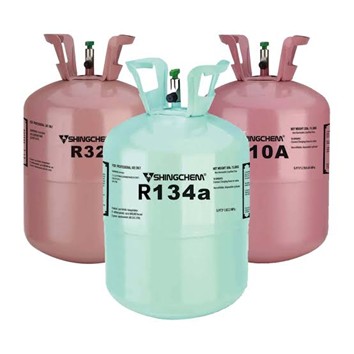
The Single Window system Ozone Depleting Substances (ODS) module has been enhanced to support the management of refrigerant quotas in line with the evolving requirements for Hydrofluorocarbons (HFCs) under the Montreal Protocol.
Since the implementation of the ODS module in 2021, refrigerants declared on permits have been recorded by mass (kilograms). Following further clarification of the requirements for HFC quota management, the Single Window project team worked with UNCTAD and relevant stakeholders to determine how Global Warming Potential (GWP) could be incorporated into the system without changing the existing permit declaration process.
The enhancement was discussed with United Nations Environment Programme (UNEP) officials and relevant in-country ODS stakeholders to ensure that the system design appropriately reflected the applicable quota requirements.
The updated functionality introduces an individual quota in addition to the national quota. Depending on the refrigerant, some items will be managed against a GWP-based quota, while others will continue to be managed using an individual mass-based quota.
Importantly, the existing permit process remains unchanged. Users will continue to declare refrigerant quantities by mass, while the system will apply the appropriate quota calculation and management rules in the background.
The enhancement was developed, tested and successfully deployed by the project team and the ODS Officer in July 2026. The updated functionality has also been implemented with full backward compatibility, ensuring that existing records and processes continue to operate as before.
The enhanced quota functionality will support the ODS team in managing and monitoring national and individual HFC quotas and will streamline reporting and quota administration within the system. The new quota arrangements will take effect from a 1 January 2027.
Global Warming Potential (GWP) measures how much heat a greenhouse gas traps in the atmosphere compared with carbon dioxide (CO2) which has a GWP of 1. Hydrofluorocarbons (HFC), commonly used in refrigeration and air conditioning do not deplete the ozone layer, but many have high GWPs and can contribute significantly to climate change when released into the atmosphere.
As a Party to the Kigali Amendment to the Montreal Protocol, Vanuatu is committed to gradually phasing down the consumption of HFCs and promoting the transition to lower-GWP alternatives. To support this phase-down, Vanuatu’s HFC import quotas are measured in kgs carbon dioxide equivalent (CO2-eq), taking into account both the quantity imported and the GWP of each HFC. This means that higher GWP refrigerants use a larger portion of an importer’s quota encouraging shift towards more environmentally friendly alternatives.