Build & Design
Welcome to the Department of Environmental Protection and Conservation

Welcome!

Welcome to the website of the Vanuatu Department of Environmental Protection and Conservation. This website aims to give you updated information on Environmental Protection and Conservation in Vanuatu.

But what does this involve? It includes, assessing the environmental impact of proposed developments; working with communities to establish Community Conservation Areas; working with researchers to learn more about our unique environment; protecting internationally endangered species; controlling ozone depleting substances; and working with municipal and provincial governments to manage waste and pollution.

Environment is very essential as it supports and sustains life. Living being are depend upon the environment for their survival. Hence it is our responsibility to manage, protect and conserve our environment for today and tomorrow.

It also means administering environmental laws and collaborating with other partners to address local, regional and global priorities. Thanks for your interest in the envinronment of Vanuatu.

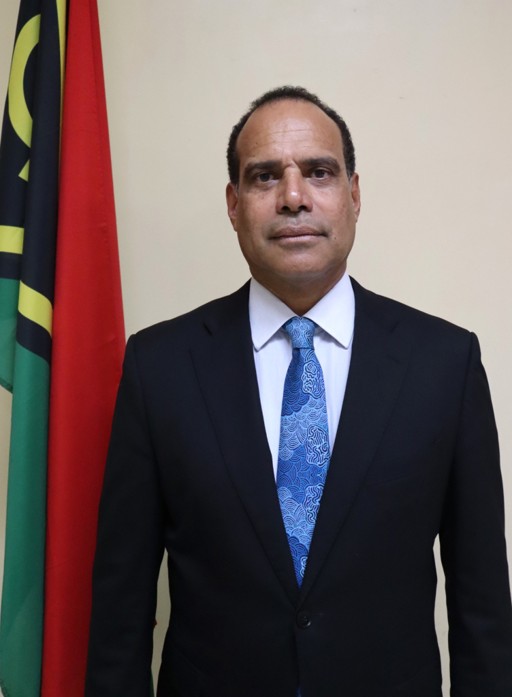
Honourable Ralph Regenvanu

Minister of Climate Change Adaptation, Meteorology & Geohazard, Environment, Energy and Disaster Management

Biodiversity

Renewable EnergyThe variety of plants and animals found in Vanuatu is called its biodiversity.

Read More...

Conservation

ConservationConservation, in relation to the environment, is the act of protecting and preserving biodiversity.

Read More...

Research

Renewable EnergyBioprospecting is any activity undertaken to harvest or exploit genetic resources.

Read More...

Policy & Legislation


Over the years, the Vanuatu has made a number of pieces of environmental legislation, but not all of this legislation falls under the mandate of the department. Some environmental legislation is administered by other government agencies such as the Ministry of Agriculture, Livestock, Forestry, Fisheries, and Biosecurity. Together with these other agencies, the department works to achieve its vision of a clean, resilient and sustainable environment.

One of the tools the government uses to lead and guide ‘evriwan’ towards this vision is to have in place appropriate legislation.

  1. International conventions and Agreement
  2. Laws
  1. Policies
  2. Compliance and Enforcement
  3. Other

Pollution (Control) Act

The Pollution (Control) Act No. 10 of 2013 commenced in June 2014 and aims to control the discharge and emission of pollution in Vanuatu. Importantly, the Act creates a framework for the department to develop and introduce pollution standards and permit systems and allows the department to take compliance action when pollution is occurring.

Waste Management Act

The Waste Management Act No. 24 of 2014 commenced in June 2014 and provides for the protection of the environment by encouraging effective waste services and operations.

It establishes specific responsibilities for identifying waste, collecting waste, disposing of waste, planning and reporting on waste management and managing hazardous waste. These responsibilities are shared between the department, municipal and provincial councils, the Ministry of Health and Biosecurity Vanuatu. The relevant acts can be viewed from below:

On 1 February 2018, the Honourable Minister signed three orders made under the Waste Management Act No. 24 of 2014. The orders address three waste issues and implement the decision of the Council of Ministers to ban certain non-biodegradable plastics. The orders address:

  • The control of single use plastic bags, plastic straws and polystyrene takeaway boxes
  • Littering
  • The licensing of private waste operators.

The gazette can be downloaded from below:

National Parks Act

The National Parks Act [Cap. 224] provides for the declaration, protection and preservation of national parks and nature reserves.

International Trade (Flora and Fauna) Act and Regulations

The International Trade (Flora and Fauna) Act [Cap. 210] and the International Trade (Flora and Fauna) Regulations (Order No. 2 of 1991) implement Vanuatu’s obligation as a party to the Convention on International Trade in Endangered Species of Wild Fauna and Flora (CITES). Relevant acts and regulations can be viewed from below:

What is CITES?

CITES is an international agreement between governments. Its aim is to ensure that international trade in specimens of wild animals and plants does not threaten their survival. Vanuatu became a signatory to CITES in 1989. Signatory countries prohibit trade in an agreed list of endangered species and regulate and monitor trade in species that may become endangered. ‘CITES species’ include both live and dead specimens and parts and derivatives of listed species and cannot be traded without a permit.

The Department of Environmental Protection and Conservation (DEPC) is the CITES Management Authority for Vanuatu. It is the sole agency responsible for issuing CITES permits. Permits are issued only from the Department's Port Vila Office and two working days are required to process permit applications.

To enforce CITES, the DEPC works closely with other government departments such as the Department of Customs and Inland Revenue, the Department of Tourism, the Vanuatu Police Force and the Ministry of Agriculture, Livestock, Forestry, Fisheries and Biosecurity. In particular, the Vanuatu Fisheries Department and the Department of Forests play an important role as the CITES Scientific Authorities for Vanuatu, providing advice to DEPC about identifying species and issuing CITES permits.

What species have their trade restricted by CITES?

CITES provisions apply to a number of species, and products made from these species, that are available for purchase by visitors to Vanuatu. This includes the tree ferns that are used by Ambrym islanders to carve statues; some shells; corals; and turtles.

Under CITES, the most endangered species are listed in Appendix I. These species are threatened with extinction and cannot be traded other than in exceptional circumstances. Appendix I species found in Vanuatu include the Peregrine Falcon, dugongs and all species of turtle.

Where wildlife or wildlife products are allowed to be traded for specific purposes such as scientific research or captive breeding the recipient country must firstly issue an import permit BEFORE DEPC will issue an export permit.

Conversely if specimens are to be brought to Vanuatu, an import permit must be issued by DEPC BEFORE the source country issues an export permit. Species or their products brought into Vanuatu without a permit will be confiscated.

Other species that are not necessarily now threatened with extinction but that may become so unless trade is closely controlled are included in Appendix II of CITES. International trade in Appendix II species is allowed at the discretion of the government of the exporting country and a CITES permit must be obtained from DEPC.

Appendix II species found in Vanuatu include the Vanuatu or White Flying Fox and the Banks Flying Fox, Green Palm Lorikeet, Sperm Whale, Oceanic Whitetip Shark, Humphead Wrasse, Giant Clam, Clams, and a variety of coral species.

Appendix III of CITES contains species that are protected in at least one country, which has asked other CITES Parties for assistance in controlling the trade. Changes to Appendix III follow a distinct procedure from changes to Appendices I and II, as each Party is entitled to make unilateral amendments to it.

Trade in these species is only permitted with an appropriate export permit and a certificate of origin and requires a CITES permit from DEPC. Appendix III species found in Vanuatu include: Charonia tritonis (Conch Shell or Bubu Shell), Nautilus pompilius (Nautilus shell) and Cypraea species (Cowrie Shells).

Other Environmental Laws

While the department administers a number of environmental laws, other Ministries also have environmental responsibilities that link with the work of the department. For example:

  • departments within the Ministry of Agriculture, Livestock, Forestry, Fisheries, and Biosecurity are responsible for the Fisheries Act No. 10 of 2014, the Forestry Act [Cap. 276], the Animal Importation and Quarantine Act [Cap 201], the Plant Protection Act [Cap 239] and the Pesticides (Control) Act [Cap 226].
  • departments within the Ministry of Lands and Natural Resources are responsible for the Petroleum (Exploration and Production) Act [Cap 227], the Quarry Act No. 9 of 2013, the Geothermal Energy [Cap 197], the Mines and Minerals [Cap 190] and the Pesticides (Control) Act No. 11 of 1983 [Cap 226] Water Resources Management Act [Cap 281].
  • departments within the Ministry of Public Utilities are responsible for the Shipping Act [Cap 53], the Maritime Act [Cap 131] and the Roads Act No. 35 of 2013.
  • departments within the Ministry of Internal Affairs, together with municipal and provincial governments, are responsible for the Physical Planning Act [Cap. 193] and the  Foreshore Development [Cap 90].

Copies of these laws can be found on PacLII.

Contact Us

Port Vila Office

Ministry of Climate Change Adaptation,
Meteorology & Geo-Hazards, Environment,
Energy and Disaster Management compound, Nambatu
PMB 9063, Port Vila
Phone: (678) 25302 | 33430

Luganville Office

Sanma Provincial Government Council,
PMB 239,
Luganville,
Sanma

Location of DEPC Office

Most Read

⚠️ Beware of fake websites pretending to be official. Always check the domain carefully as official Vanuatu Government sites end with .gov.vu.