Build & Design
Welcome to the Department of Environmental Protection and Conservation

Welcome!

Welcome to the website of the Vanuatu Department of Environmental Protection and Conservation. This website aims to give you updated information on Environmental Protection and Conservation in Vanuatu.

But what does this involve? It includes, assessing the environmental impact of proposed developments; working with communities to establish Community Conservation Areas; working with researchers to learn more about our unique environment; protecting internationally endangered species; controlling ozone depleting substances; and working with municipal and provincial governments to manage waste and pollution.

Environment is very essential as it supports and sustains life. Living being are depend upon the environment for their survival. Hence it is our responsibility to manage, protect and conserve our environment for today and tomorrow.

It also means administering environmental laws and collaborating with other partners to address local, regional and global priorities. Thanks for your interest in the envinronment of Vanuatu.

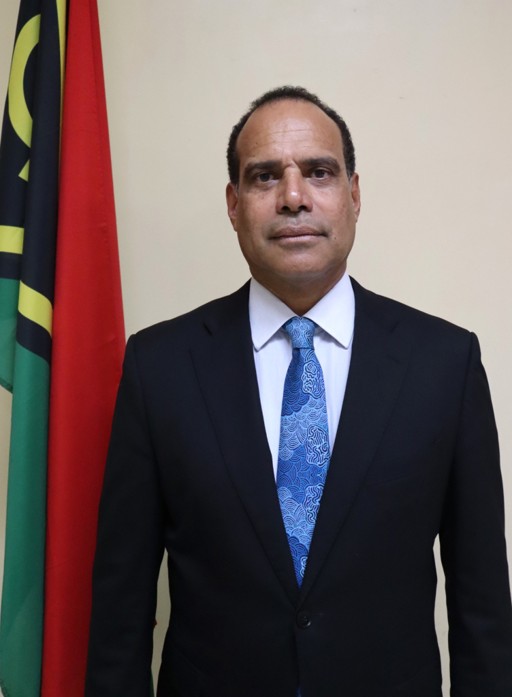
Honourable Ralph Regenvanu

Minister of Climate Change Adaptation, Meteorology & Geohazard, Environment, Energy and Disaster Management

Biodiversity

Renewable EnergyThe variety of plants and animals found in Vanuatu is called its biodiversity.

Read More...

Conservation

ConservationConservation, in relation to the environment, is the act of protecting and preserving biodiversity.

Read More...

Research

Renewable EnergyBioprospecting is any activity undertaken to harvest or exploit genetic resources.

Read More...

Policy & Legislation


Over the years, the Vanuatu has made a number of pieces of environmental legislation, but not all of this legislation falls under the mandate of the department. Some environmental legislation is administered by other government agencies such as the Ministry of Agriculture, Livestock, Forestry, Fisheries, and Biosecurity. Together with these other agencies, the department works to achieve its vision of a clean, resilient and sustainable environment.

One of the tools the government uses to lead and guide ‘evriwan’ towards this vision is to have in place appropriate legislation.

  1. International conventions and Agreement
  2. Laws
  1. Policies
  2. Compliance and Enforcement
  3. Other

The Montreal Protocol

What is the Montreal Protocol?

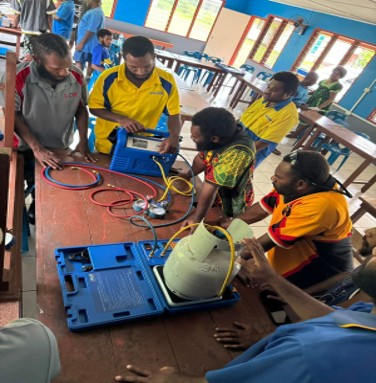
This convention aims to ensure that national governments have regulations in place that regulate the import of Ozone Depleting Substances (ODS) and that these substances are licensed.

Vanuatu has been party to the Montreal Protocol on Ozone Compliance since 1994.

OzDS are the gases produced by human activity such as methane and hydrochlorofluorocarbons that damage the ozone layer.

The ozone layer is the part of the upper atmosphere around our planet that protects us from the harmful rays of the sun. The Government wishes to announce that it will be soon ratifying this Protocol.

What has been achieved since Vanuatu signed the Convention?

Since the 1994 signing of the Montreal Protocol, the Government has made the following achievements:

  • Collected and submitted the 2006, 2007 and 2008 Protocol Article 7 data to the Ozone Secretariat.
  • Prepared and submitted 2007 and 2008 Country Progress Report to the Fund Secretariat.
  • Prepared all required reports to renew of the institutional strengthening (IS) project and received funding approval of US$32,000 for 2010.
  • Initiated the process for the development of the ozone regulation including a ODS import/export licensing system for Vanuatu, and co-ordinated the completion of the draft for further progress.
  • Organised one stakeholder workshop to raise awareness of ozone layer protection issues.
  • Initiated the recruitment a full time ozone officer within the Department of Environment and Conservation (DEC).
  • Participated in the discussion of regional Hydrochlorofluorocarbons Phase-out Management Plan (HPMP) preparation, and participated the Fiji HPMP preparation inception workshop.

How is Vanuatu Currency Non-Compliant to the Convention?

Vanuatu is currently non-compliant to the Montreal Protocol. In order to fulfill Vanuatu's obligations under the Protocol, Vanuatu will need to set up a National Ozone Unit within the DEC.

Some of the challenges faced by Vanuatu include:

  • Vanuatu is non-compliant with its 2007 and 2008 chlorofluorocarbons (CFCs) consumption control measures under the Montreal Protocol as per Decision XXI/26. A plan of action to return to compliance is being prepared and will be submitted to the Ozone Secretariat in March 2010.
  • A full time ozone officer is being recruited and his/her capacity needs to be strengthened.
  • The licensing system for the control of ODS import and export as required by the Montreal Protocol needs to put in place soon.
  • Vanuatu has not yet ratified the Montreal and Beijing Amendments to the Protocol.
  • A Customs training workshop to help to control the ODS import under the regional strategy has not yet been organised.

Convention on International Trade of Endangered Species

What is CITES?

Vanuatu became a signatory to the Convention on International Trade of Endangered Species (CITES) concerning the protection of Wild Fauna and Flora in 1989. Signatory countries prohibit trade in an agreed list of endangered species and regulate and monitor trade in species that may become endangered.

CITES signatories requires that governments issues permits for traffic in these species. In addition, countries may enforce even stricter control than required by the convention if they wish to give special protection to a particular species.

The Department of Environment and Conservation (DEC) is the sole agency responsible for the issual of CITES permits by the Vanuatu Government. Permits can only be issued from the Department's Port Vila Office. 2 working days are required to process permit applications.

A service fee applies to the issue of all permits. A surcharge may be placed on any permit required in less than 2 working days. CITES provisions apply to both live and dead specimens, or parts and derivatives of listed species.

To enforce CITES, the DEC has been working closely with other government departments such as Customs, Police, Fisheries, Forestry and Agriculture, to regulate or control trading of endangered (including threatened and endemic) species of fauna and flora that have been listed under CITES appendices below.

What Species Have Their Trade Restricted by CITES?

The most endangered species are listed in Appendix I of the Convention. No permits are issued for trade in these species. Where wildlife or wildlife products are allowed to be trafficked for specific purposes such as scientific research or captive breeding the recipient country must firstly issue an import permit BEFORE the Vanuatu Government will issue an export permit.

Conversely if specimens are to be brought to Vanuatu an import permit must be issued by the Vanuatu Government BEFORE the source country issues an export permit. Species or their products brought into Vanuatu without due permit will be confiscated. Other species at risk are included in Appendix II of the Convention.

International trade in Appendix III species is allowed at the discretion of the government of the exporting country, but only with a government permit. CITES provisions apply to a number of species, and products made from these species, that are available for purchase by visitors to Vanuatu.

This includes the tree ferns that are used by Ambrym islanders to carve statues; some shells; and all corals and turtles. Countries such as Australia and New Zealand are strict in enforcing CITES restrictions. Visitors are encouraged to obtain permits prior to leaving Vanuatu. CITES provisions apply to certain species in Vanuatu based on 3 Appendices:

APPENDIX I - Species in this list cannot be traded, they are:

  • The four species of Flying Fox and Fruit Bat present in Vanuatu.
  • The Peregrine Falcon.
  • All species of Sea Turtle.
  • Saltwater Crocodiles.
  • Fire corals.

APPENDIX II - Species in this list can be exported by permit only, they are:

  • Marine mammals, including dugong, whales and dolphins.
  • A number of bird species including Pigeons and Fruit Doves, the Rainbow and Green Palm Lorikeets, Megapodes, Parrot-Finches and common Birds of Prey.
  • Snakes and Lizards.
  • Giant Clam shells (Tridacna sp. and Hippopus sp.).
  • All coral species of the Coenothecalia, Stolonifera, Antipatharia and Scleratinia families.
  • All species of tree fern.
  • All species of orchids.
  • All species of palms.
  • All species of Cordyline (Nagaria).

Appendix III - Trade in these species is only permitted with an appropriate export permit and a certificate of origin, they are:

  • Charonia tritonis (Conch Shell or Bubu Shell).
  • Nautilus pompilius (Nautilus shell).
  • Cypraea species (Cowrie Shells).
International Conventions and Agreements

Many environmental issues cross national boundaries. As environmental issues have risen in importance, international laws about environmental protection and management have been developed. Examples of these international laws include Multilateral Environmental Agreements or MEAs.

You can find a list of MEAs that Vanuatu is a party to in Annex 3 of the Vanuatu National Environment Policy and Implementation Plan 2016 - 2030 below:

Some of the MEAs implemented by the Department of Environmental Protection and Conservation include the:

  • Convention on Biological Diversity www.cbd.int/
  • Nagoya Protocol on Access to Genetic Resources and the Fair and Equitable Sharing of Benefits Arising from their Utilisation to the Convention on Biological Diversity www.cbd.int/abs
  • Convention on International Trade in Endangered Species of Wild Fauna and Flora (CITES) www.cites.org
  • United Nations Convention to Combat Desertification in those Countries Experiencing Serious Drought and/or Desertification, Particularly in Africa www.unccd.int
  • Stockholm Convention on Persistent Organic Pollutants www.pops.int
  • Waigani Convention www.sprep.org/legal/waigani-convention
  • Vienna Convention for the Protection of the Ozone Layer and the Montreal Protocol on Substances that Deplete the Ozone Layer ozone.unep.org
  • Agreement Establishing the South Pacific Regional Environment Programme (SPREP) sprep.org

Other MEAs

As the definition of environment is broad - it includes the land and water; the layers of the atmosphere; organic and inorganic matter and living organisms; weather and climatic systems; and the interacting natural, cultural and human systems including these components - the focal point for MEAs is not always DEPC.

Here are some examples of other international agreements:

  • United Nations Framework Convention on Climate Change and the Kyoto Protocol to the United Nations Framework Convention on Climate Change newsroom.unfccc.int
  • Memorandum of Understanding for the Conservation of Cetaceans and their Habitats in the Pacific Islands Region, Memorandum of Understanding  on the Conservation of Migratory Sharks and the Memorandum of Understanding on the Conservation and Management of Dugongs and their Habitats Throughout Their Range. These Memorandums of Understanding are linked to the Convention on Migratory Species www.cms.int
  • International Plant Protection Convention www.ippc.int/en
  • United Nations Convention on the Law of the Sea www.un.org/Depts/los/index.htm
  • Agreement on the International Dolphin Conservation Program www.iattc.org/IDCPENG.htm
  • World Heritage Convention whc.unesco.org
  • Convention on the Conservation of Antarctic Marine Living Resources www.ccamlr.org
  • International Convention for the Prevention of Pollution from Ships; International Convention on Standards of Training Certification and Watchkeeping for Seafarers; and International Convention on Maritime Search and Rescue. These conventions are all related to the International Maritime Organization www.imo.org/en/About/Conventions/ListOfConventions/Pages/Default.aspx
  • Pacific Islands Forum Fisheries Agency Convention www.ffa.int/about

Contact Us

Port Vila Office

Ministry of Climate Change Adaptation,
Meteorology & Geo-Hazards, Environment,
Energy and Disaster Management compound, Nambatu
PMB 9063, Port Vila
Phone: (678) 25302 | 33430

Luganville Office

Sanma Provincial Government Council,
PMB 239,
Luganville,
Sanma

Location of DEPC Office

Most Read

⚠️ Beware of fake websites pretending to be official. Always check the domain carefully as official Vanuatu Government sites end with .gov.vu.